Google’s Birthday The Story Behind the Search Giant’s Special Day
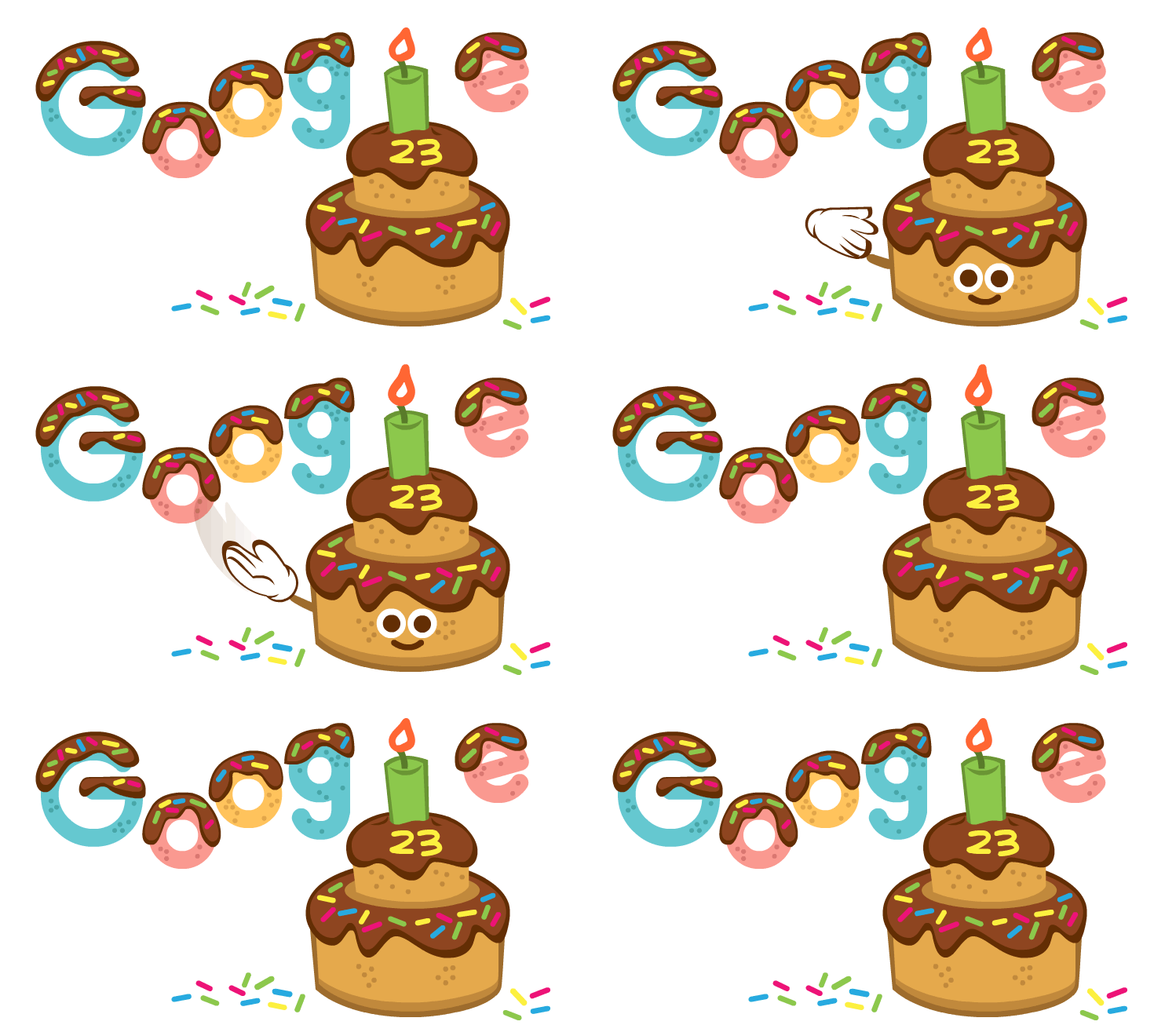
Every year, millions of people search for one simple question: When is Google’s birthday? It sounds like an easy question, but Google’s history makes the answer a little more interesting than you might expect.
Google has become such a normal part of everyday life that it is easy to forget how unusual the idea was in the beginning. Today, we use Google to find recipes, check the weather, read the news, learn new skills, shop online, navigate cities, and answer those random questions that suddenly pop into our heads.
But how did this enormous technology company begin? Why is September 27 associated with Google’s birthday? And what happened before Google became the search engine almost everyone knows?
Let’s take a closer look.
When Is Google’s Birthday?
Google traditionally celebrates its birthday on September 27.
The date is connected with the history of Google Inc., which was officially incorporated in September 1998. However, the company’s story actually began before that date.
Larry Page and Sergey Brin started working together on a search engine project while they were students at Stanford University. Their early project was originally called BackRub.
So, Google’s “birthday” is not exactly the same thing as the day the idea was born. Think of it like a person having an official birth certificate while their story started months or years earlier.
Who Founded Google?
Google was founded by Larry Page and Sergey Brin.
The two met at Stanford University in the mid-1990s. Both were interested in computers, mathematics, and the rapidly developing world of the internet.
At the time, the web was expanding quickly. There were already search engines, but finding useful information could be frustrating. Page and Brin believed they could build something better by analyzing how websites connected to one another.
Their research eventually developed into a search engine based on a system that became known as PageRank.
Instead of simply looking at how often a keyword appeared on a webpage, the system considered relationships between websites and links. In simple terms, a link could act somewhat like a recommendation.
That idea helped Google stand apart.
The Early Days of Google
Google did not begin inside a massive Silicon Valley office with thousands of employees.
It started as a research project.
Page and Brin worked from Stanford, experimenting with ways to organize information on the growing World Wide Web. Their early search engine operated under the name BackRub.
Eventually, they changed the name to Google, inspired by the mathematical term “googol,” which represents the number 1 followed by 100 zeros.
The name was fitting. The founders wanted to organize an enormous amount of information, and the internet was becoming increasingly massive.
In 1998, Google Inc. was officially established.
The company received early financial support from investors, including Sun Microsystems co-founder Andy Bechtolsheim, whose famous early check helped give the young company momentum.
Why Did Google Become So Popular?
What made Google different?
For users, one of the biggest attractions was simplicity.
The early Google homepage was remarkably clean. Instead of overwhelming visitors with buttons, advertisements, and complicated menus, it focused on one main purpose: search.
You typed something into the box, pressed the button, and received results.
It sounds obvious now, but at the time, that straightforward experience was powerful.
Google also worked hard to improve the relevance of its results. The company continued developing algorithms and technology designed to help users find useful information quickly.
That created a powerful cycle: better search brought more users, more users created more data and attention, and that helped Google continue expanding.
Google’s Birthday Became a Digital Tradition
Google’s birthday has become more than just a company anniversary.
One of the most recognizable traditions associated with Google is the Google Doodle.
A Google Doodle is a special version of the Google logo that appears on the homepage to recognize holidays, historical events, cultural moments, achievements, and notable people.
Google has also used special birthday-related Doodles over the years.
For many internet users, checking the Google homepage has become a small daily ritual. Sometimes you discover an important historical figure. Other times, you might find an interactive game sitting where the familiar logo normally appears.
It is a clever reminder that Google’s homepage is not just a doorway to search. It has also become a small piece of internet culture.
From Search Engine to Technology Giant
Google is no longer simply a search engine.
Over the years, the company expanded into numerous areas of technology.
Google developed or acquired products and services covering online advertising, email, video, mobile operating systems, cloud computing, maps, browsers, artificial intelligence, and more.
Some familiar names include:
- Google Search
- Gmail
- Google Maps
- Google Chrome
- YouTube
- Android
- Google Drive
- Google Photos
- Google Cloud
This expansion transformed Google from a search startup into one of the world’s most influential technology businesses.
In 2015, Google became a major company under a new parent structure called Alphabet Inc., with Google operating as one of Alphabet’s key businesses.
Why Google Matters in Everyday Life
Imagine waking up tomorrow and losing access to Google Search, Maps, Gmail, YouTube, and other services you regularly use.
It would probably feel strange.
That is because Google products have become deeply connected to modern digital life.
Students use Google to research assignments. Businesses use Google tools to communicate and advertise. Travelers use Maps to find destinations. Creators use YouTube to reach audiences. Publishers use search and advertising technologies to attract readers and generate revenue.
For many people, Google is not simply a website anymore. It is part of the basic infrastructure of the internet.
How Google Changed the Way We Search
Before modern search engines became dominant, finding information online could feel like looking for a particular book in a giant library with no catalog.
Google helped make the process much easier.
Instead of manually browsing website directories, users could enter a few words and quickly receive a list of potentially useful pages.
Of course, search has changed dramatically since the late 1990s. Modern search engines can understand context, locations, images, news, products, questions, and increasingly complex conversational queries.
Artificial intelligence is also changing how people interact with online information.
The basic question remains the same, though: How can technology help people find useful information faster?
That question was at the heart of Google’s original mission.
Google’s Birthday Is Also a Story About the Internet
Google’s birthday is interesting because it reflects how quickly the internet changed.
In 1998, the web looked very different. Smartphones did not exist in their modern form. Social media had not become a global phenomenon. Streaming video was nowhere near today’s scale, and cloud services were still in their early stages.
Google grew alongside the internet.
As people created more websites and generated more digital information, the need for effective organization became increasingly important.
In that sense, Google’s growth is closely connected with the growth of the web itself.
Fun Facts About Google
Here are a few interesting facts about Google’s journey:
- Google was founded by Larry Page and Sergey Brin.
- The company’s roots go back to a Stanford research project.
- The early search engine was called BackRub.
- The name Google was inspired by the mathematical term “googol.”
- Google was officially incorporated in 1998.
- September 27 is traditionally celebrated as Google’s birthday.
- Google introduced its first Doodle in 1998.
- Google later expanded into products such as Gmail, Maps, Chrome, Android, and YouTube.
- Google became part of Alphabet’s corporate structure in 2015.
Each fact tells a small part of a much bigger story.
Conclusion: More Than Just a Birthday
Google’s birthday is more than an annual date on the calendar. It represents the beginning of a company that helped reshape how people interact with information.
From a small Stanford research project to a global technology ecosystem, Google’s journey has been remarkably dramatic. Its simple search box became a gateway to billions of webpages, and its products now touch countless parts of everyday digital life.
So, when September 27 comes around and people talk about Google’s birthday, it is worth remembering the bigger picture. Behind that familiar logo is a story of university research, experimentation, entrepreneurship, innovation, and the explosive growth of the internet.
The web has changed enormously since 1998—and Google has changed with it. The next chapter, especially with artificial intelligence transforming search and online technology, may be just as interesting as the first.