Anne Carson The Poet Who Redefined Modern Literature
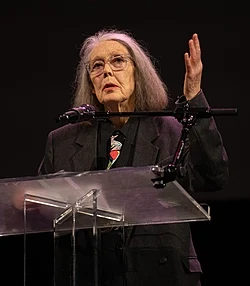
Anne Carson is not the kind of writer you read casually and forget five minutes later. Her work can feel like poetry, philosophy, ancient history, autobiography, and experimental fiction all at once. Sometimes it is sharp and intellectual; at other times, it is deeply emotional and surprisingly intimate.
But who exactly is Anne Carson, and why has she become such an influential figure in contemporary literature?
Born in Canada, Carson has built an extraordinary career by refusing to stay inside traditional literary boundaries. Her writing often mixes the ancient world with modern life, classical scholarship with personal emotion, and poetic language with unusual structures. The result is literature that asks readers to slow down, think, and sometimes read the same page twice.
Who Is Anne Carson?
Anne Carson is a Canadian poet, essayist, translator, and classicist known for her innovative approach to literature. She was born in Toronto, Canada, in 1950 and developed a strong interest in ancient Greek literature and language.
Unlike writers who focus on a single genre, Carson moves freely between poetry, essays, translations, criticism, and hybrid works. Her academic background in classics has had a major influence on her writing.
Think of her work as a bridge between two worlds. On one side is ancient Greece, filled with myths, philosophers, and tragic heroes. On the other is modern life, with its loneliness, relationships, memories, and uncertainty. Carson places these worlds next to each other and lets them speak.
Anne Carson’s Education and Classical Influence
Carson’s fascination with ancient literature began early. She studied classical languages and literature and eventually became a respected scholar of Greek literature.
Her academic career includes teaching and research at several universities. Her knowledge of Greek poetry and philosophy is not simply something she keeps inside academic papers. Instead, she transforms that knowledge into creative literature.
This is one of the most interesting things about Carson. She can take an ancient text that seems distant and dusty and make it feel strangely relevant.
Why does an ancient Greek tragedy still matter today? Carson’s writing often suggests that human emotions have changed far less than technology has.
Love, grief, jealousy, desire, separation, and loss are still recognizable thousands of years later.
What Makes Anne Carson’s Writing Different?
Carson’s writing is difficult to place into a single category. She frequently combines poetry, prose, translation, criticism, biography, mythology, and historical material.
Her books may contain fragments, quotations, footnotes, photographs, essays, and poetic passages. Rather than following a straight road, her writing can feel like a maze.
Yet there is usually a purpose behind that complexity.
Carson is interested in gaps—what people say, what they leave unsaid, and what happens between two people when communication breaks down.
Her style can also be remarkably economical. A few carefully chosen words may carry enormous emotional weight.
“Autobiography of Red” and Its Lasting Impact
One of Carson’s best-known works is Autobiography of Red, published in 1998.
The book is inspired by the ancient Greek poet Stesichorus and his story of Geryon, a monster associated with the myth of Hercules. Carson takes this ancient figure and turns him into a modern character with complicated emotions and an intensely personal life.
That sounds unusual, doesn’t it?
It is.
But that is precisely the point. Carson transforms an ancient myth into a story about identity, desire, love, and growing up.
The book demonstrates her talent for taking something extremely old and making it feel contemporary. It also shows why she is so difficult to categorize. Is it a novel? Poetry? Mythological retelling? Literary experiment?
In a way, it is all of these things.
“Nox”: Grief, Memory, and Loss
Another major work is Nox, published in 2010. It was created as a memorial for Carson’s brother, Michael.
The work is presented in an unusual accordion-style format, allowing readers to unfold a long continuous piece of writing.
Nox explores grief and memory through fragments, translations, photographs, documents, and personal reflections. Instead of presenting grief as a simple story with a beginning and an ending, Carson shows how memory actually works.
Memory is messy.
One moment you remember a person’s voice. The next, you remember an object, a sentence, or a tiny detail that you had almost forgotten.
Nox captures that strange movement of remembering and forgetting.
Anne Carson and Ancient Greek Literature
Ancient Greek literature is one of the strongest threads running through Carson’s career.
She has translated and written about major Greek figures, including Sappho and Euripides. Her engagement with classical literature is not merely academic. She treats ancient writers as living voices.
Sappho, in particular, has been important to Carson’s work.
Sappho’s surviving poetry is often fragmented, with many poems existing only in incomplete pieces. Carson is fascinated by these gaps.
And perhaps that makes sense. What is a fragment if not a reminder that we never possess the complete story?
Carson’s writing repeatedly returns to this idea: absence can sometimes be as powerful as presence.
Major Themes in Anne Carson’s Work
Several themes appear again and again throughout Carson’s writing.
Love and desire are central to many of her works. However, she rarely presents love as simple or comfortable. Instead, love can be confusing, painful, obsessive, and transformative.
Loss and grief are equally important. Carson explores how people continue to live with absence rather than simply “move on.”
Language is another major concern. She is interested in what words can express—and what they cannot.
Time and memory also play important roles. Her works often move between past and present, showing how the past continues to influence modern identity.
Finally, there is silence. What happens when something cannot be said? Carson often finds literary power in exactly that space.
Why Anne Carson Matters Today
Carson’s importance goes beyond poetry.
She has helped demonstrate that literature does not need to obey strict rules. A book can be scholarly and poetic. It can be ancient and modern. It can be personal and intellectual at the same time.
Her work also challenges readers to become active participants.
You cannot always rush through a Carson book. Sometimes you need to stop and ask yourself what a fragment means or why a particular structure was chosen.
In a world filled with short videos, quick posts, and instant answers, that kind of reading can feel almost rebellious.
Carson asks us to slow down.
Awards and Literary Recognition
Anne Carson has received significant recognition throughout her career. Her writing has earned major literary honors, including the Griffin Poetry Prize and the T. S. Eliot Prize.
She has also been widely praised for her translations and contributions to classical literature.
However, awards only tell part of the story.
Carson’s real influence can be seen in how many contemporary writers and readers approach genre. She has shown that poetry can borrow from scholarship, fiction can borrow from mythology, and personal writing can coexist with intellectual investigation.
Anne Carson’s Literary Legacy
Anne Carson has created a body of work that is difficult to imitate because it comes from such a distinctive combination of scholarship, imagination, and emotional intelligence.
Her books encourage readers to question familiar categories.
What is poetry?
What is translation?
What is memory?
What does it mean to love someone?
And how much can language actually tell us about another human being?
These questions do not have easy answers. Carson does not pretend that they do. Instead, she turns the uncertainty itself into art.
Conclusion
Anne Carson stands out as one of the most distinctive literary voices of the modern era. By combining classical scholarship with poetry, personal experience, translation, and experimental storytelling, she has created a style that feels both ancient and completely new. Her work can be challenging, but that challenge is part of its appeal. Carson reminds us that literature does not always need to provide quick answers. Sometimes the most powerful writing leaves us with better questions. If you are interested in poetry, mythology, philosophy, or simply the strange complexity of being human, exploring Anne Carson’s work can open a fascinating door into all four.