India LPG Supply Shock 2026: How West Asia Conflict Is Disrupting Cooking Gas And Hitting Restaurants Nationwide
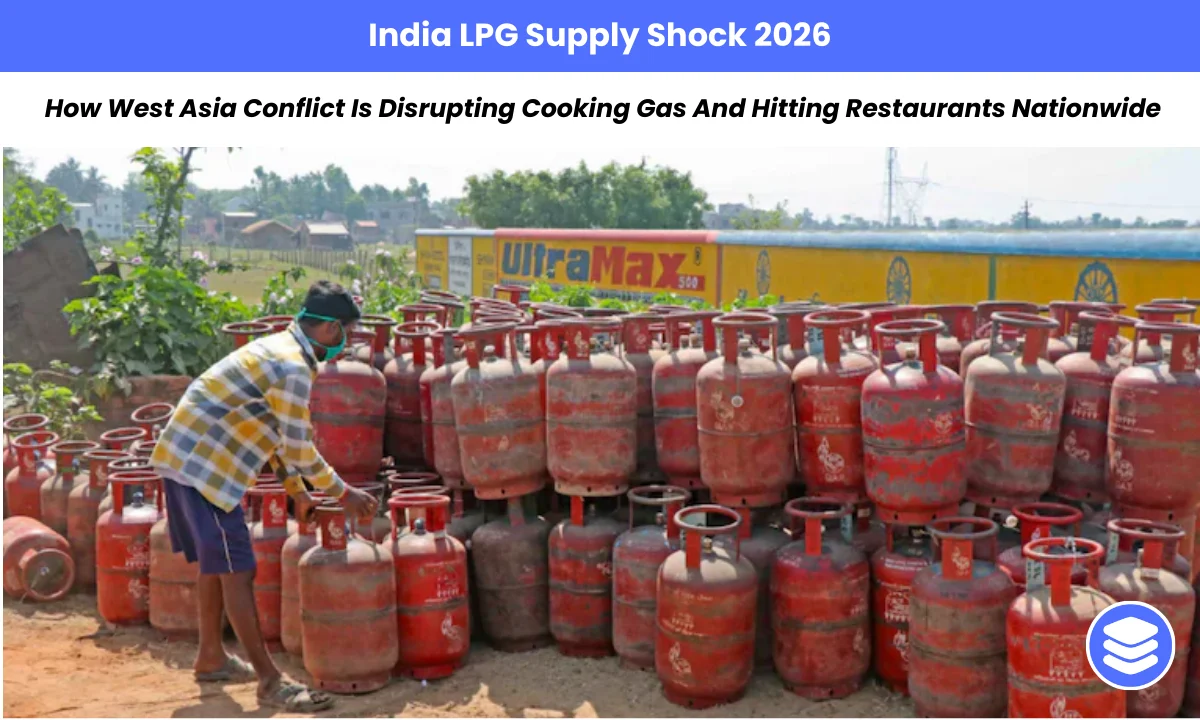
India LPG Supply Shock 2026 How West Asia Conflict Is Disrupting Cooking Gas And Hitting Restaurants Nationwide | Image Via © Moneycontrol.com
The latest LPG supply news in India has suddenly become a hot topic after tensions in West Asia started affecting global fuel routes. Since India imports a large share of its LPG from the Gulf region, any disruption in shipping routes like the Strait of Hormuz directly impacts supply. This is why discussions around LPG shortage, cooking gas prices and commercial cylinder availability are trending across news platforms and social media.
Many people are worried about whether their household LPG cylinders will be affected. At the same time, restaurants and hotels in major cities are already facing issues with commercial LPG supply. The government has stepped in with several measures to stabilise the situation and avoid panic among consumers.
Key Takeaways
- West Asia conflict has disrupted LPG supply routes used by India
- Government has prioritised domestic LPG cylinders for households
- Booking gap between LPG cylinders increased to 25 days
- Commercial LPG cylinders are facing supply disruption in many cities
- Domestic cylinder prices increased by around ₹60 recently
- Restaurants and hotels may face operational challenges due to gas shortage
- Government and private companies are increasing LPG production to stabilise supply
India depends heavily on LPG imports, which means global events can quickly affect domestic supply. To understand the current LPG supply news clearly, it is important to look at the reasons behind the shortage, the government’s response and how it may impact everyday consumers.
Why LPG Supply Is Under Pressure Right Now
The current LPG shortage concerns are mainly linked to the geopolitical situation in West Asia. Conflicts involving Iran and disruptions around the Strait of Hormuz have slowed down shipping of energy products including LPG.
This route is extremely important for global energy trade. A significant portion of LPG used in Asian countries passes through this region. Since India imports a large share of its LPG requirements, any disruption in this route creates pressure on supply chains.
India consumes around 31 million tonnes of LPG every year. A large part of this demand is met through imports. When international shipments slow down, the domestic system needs to quickly adjust by increasing local production or sourcing gas from other countries.
Because of these disruptions, the government has taken steps to increase production inside the country and secure new import routes.
Government Measures To Stabilise LPG Supply
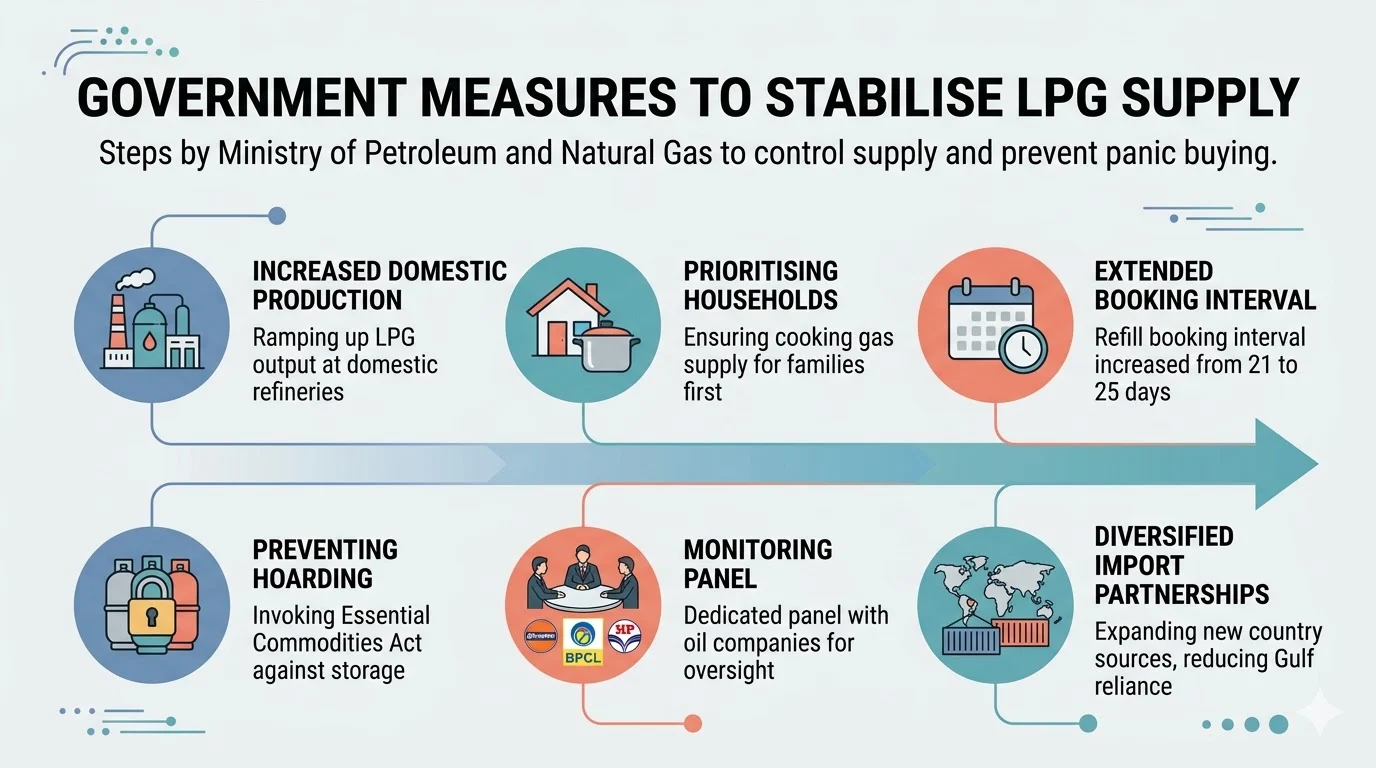
To prevent a major LPG crisis, the Ministry of Petroleum and Natural Gas has introduced multiple steps to control supply and prevent panic buying.
Some of the key actions include:
- Increasing LPG production in domestic refineries
- Prioritising LPG supply for household consumers
- Extending LPG refill booking interval from 21 to 25 days
- Invoking the Essential Commodities Act to prevent hoarding
- Creating a monitoring panel with oil companies like IOC, BPCL and HPCL
- Expanding LPG import partnerships with new countries
These measures are designed to ensure that households continue receiving cooking gas without disruption.
Another important step is the diversification of LPG imports. India is now exploring supply from multiple countries instead of relying heavily on the Gulf region. Domestic LPG Cylinder Prices In Major Cities (March 2026)
| City | Price Of 14.2 kg Cylinder | Recent Price Increase |
|---|---|---|
| Delhi | ₹913 | ₹60 |
| Mumbai | ₹912.50 | ₹60 |
| Kolkata | ₹939 | ₹60 |
| Chennai | ₹928.50 | ₹60 |
| Bengaluru | ₹915.60 | ₹60 |
| Hyderabad | ₹965 | ₹60 |
The price increase reflects rising global energy costs and supply chain disruptions.
Why Restaurants And Hotels Are Facing Bigger Problems
While domestic LPG supply is being protected, the situation is more challenging for businesses that rely on commercial cylinders.
Restaurants, hotels and catering services depend on 19 kg commercial LPG cylinders for daily operations. Many of these establishments receive frequent deliveries because they cannot store large quantities.
But due to the current restrictions, commercial LPG supply has been reduced in several cities. Industry associations have warned that many restaurants could temporarily shut down if the situation continues. Major cities reporting problems include:
- Mumbai
- Bengaluru
- Delhi
- Hyderabad
- Kolkata
- Chennai
Some restaurants have started adjusting their operations by:
- Reducing menu items that require long cooking time
- Using electric cooking appliances
- Limiting restaurant operating hours
- Switching to alternative cooking methods
This situation could also affect food delivery platforms because restaurants are their primary partners.
Role Of Energy Companies In Managing Supply
Apart from government action, private companies are also stepping in to increase production. Reliance Industries has announced that it will maximise LPG output from its Jamnagar refining complex. This refinery is one of the largest integrated refining hubs in the world.
Additional steps taken by energy companies include:
- Increasing refinery output of LPG
- Diverting gas from petrochemical production to cooking gas supply
- Optimising refinery operations to produce more LPG
- Supporting domestic supply priorities
These actions are expected to help stabilise supply in the coming weeks.
Could India Actually Face An LPG Shortage
Despite the concerns, government officials have repeatedly said that there is no immediate shortage for household consumers. India usually maintains strategic LPG reserves that can support demand for several weeks. In addition, domestic refineries are increasing production to reduce dependency on imports.
However, short term disruptions may still occur in some regions due to logistics and distribution delays. Some areas have reported waiting periods of two to eight days for LPG refills. These delays are mostly linked to supply chain adjustments rather than a complete shortage.
Consumers are being advised not to panic or hoard cylinders.
What Consumers Should Do Right Now
During situations like this, rumours often spread faster than real information. Panic buying can create unnecessary pressure on supply systems. Consumers can follow these simple precautions:
- Avoid booking multiple cylinders unnecessarily
- Do not rely on black market LPG cylinders
- Follow official updates from gas agencies
- Complete LPG connection eKYC if required
- Use LPG efficiently at home
If consumers remain calm and avoid hoarding, the distribution system can continue functioning smoothly.
Public Opinion On LPG Supply Crisis
Public reaction on social media shows mixed emotions regarding the LPG situation. Many people are worried about possible shortages and rising prices. Several users have posted about long queues at gas agencies and discussions in family WhatsApp groups about LPG availability.
At the same time, some people have appreciated the government’s quick response to prioritise household supply. A number of posts also praised Indian companies for increasing production during the crisis. Reliance Industries was frequently mentioned for boosting output at its Jamnagar refinery.
There is also criticism from some users who believe India should reduce dependence on LPG imports and promote alternatives like induction cooking. Another interesting trend is restaurants experimenting with traditional cooking methods. Some eateries are switching to wood-fired cooking, which many customers actually enjoy for its unique flavour.
Overall, the public sentiment shows concern but also confidence that the situation can be managed if supply chains stabilise.
What Could Happen Next?
The future of LPG supply in India largely depends on how the geopolitical situation evolves in West Asia. If shipping routes stabilise and imports resume normally, the current supply pressure could ease within a few weeks. Increased domestic production will also help bridge the gap.
However, if the conflict continues for a longer period, India may need to rely more on alternative suppliers and domestic energy sources.
The government is already working on diversifying import sources and strengthening energy security to avoid similar situations in the future. For now, the focus remains on ensuring that households across India continue receiving uninterrupted LPG supply.
Share This Post